


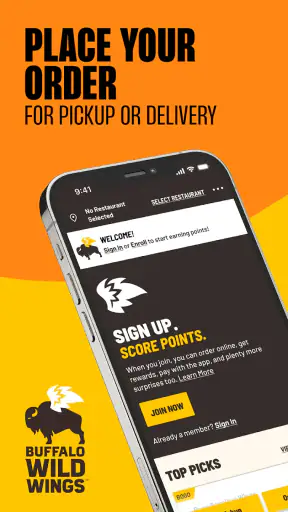
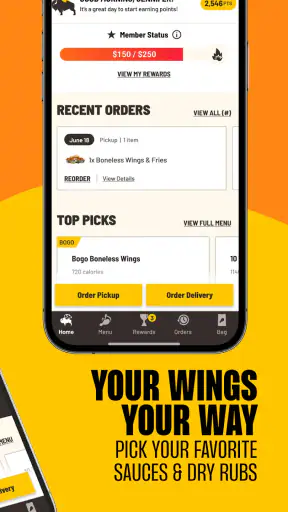
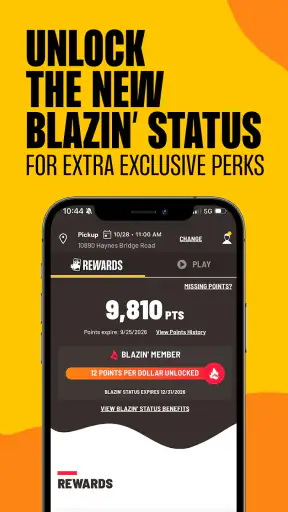
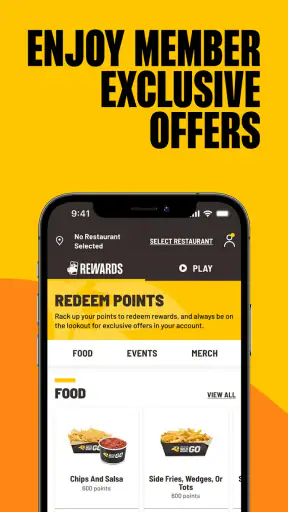
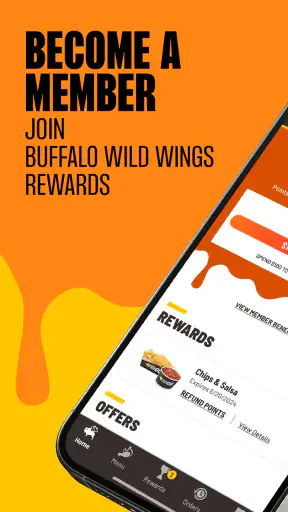

I installed Buffalo Wild Wings Ordering to see whether it is genuinely useful for getting food from Buffalo Wild Wings or simply another branded menu app taking space on a phone. My conclusion is fairly clear: it is most valuable when you already know you want Buffalo Wild Wings and want to move the ordering process away from a phone call or a general delivery marketplace. It is less compelling if you are still choosing between several restaurants, comparing broad delivery options, or looking for a food app that works across many chains.
This is a free Food & Drink app from Buffalo Wild Wings, Inc., designed around ordering Buffalo Wild Wings favorites for takeout and delivery. That narrow focus is also its biggest strength. Instead of making me search through unrelated restaurants, it keeps the attention on the chain’s own menu and ordering flow. The app is suitable for Everyone, and it is available for devices running OS 11 or later. Its current version is 2026.16.13.
What I looked for before recommending it
My first test was simple: could I decide what I wanted, choose between pickup and delivery, and reach checkout without unnecessary confusion? For a restaurant-specific app, those steps matter more than flashy extras. If the menu is easy to browse but the final order requires too much backtracking, the app has not really saved time.
I also considered when a dedicated ordering app makes more sense than the usual alternatives. A restaurant’s own app can be the better choice when you are loyal to one chain, want a direct menu experience, or prefer to keep repeat orders in one place. A general delivery app can be better when you are comparing restaurants, coordinating food from different places, or relying on its broader discovery tools. Buffalo Wild Wings Ordering should be judged against that choice, not against every type of food app.
The app has been available since September 14, 2015, so it is not a new experiment. Its audience is substantial: it has passed five million installs, with an average rating of 4.7 from roughly 215 thousand ratings and about 26 thousand written reviews. Those figures do not guarantee that every location or every order will feel perfect, but they do suggest that the app has become a familiar route for people who regularly order from the brand.
The ordering flow is strongest when your decision is already made
I found the experience easiest when I approached it with a specific plan: choose Buffalo Wild Wings, select a nearby restaurant, decide on takeout or delivery, and build the order. That is an important distinction. The app is not trying to be a restaurant-discovery tool, and it does not need to be. Its job is to reduce the distance between craving wings and placing an order.
For a first-time user, the practical questions are usually more important than the brand presentation. Is the selected location correct? Is the order intended for pickup or delivery? Are the chosen items and adjustments shown clearly before payment? I recommend checking each of those points deliberately rather than tapping through quickly, especially when ordering for several people. A dedicated app can make the process feel familiar, but familiarity can also encourage automatic confirmation.
One useful habit is to review the basket as if you were reading a paper receipt. Check the number of portions, flavors, sides, drinks, and any requested changes. This is particularly worthwhile for group orders, where a small omission can affect several diners. The app’s value is not just that it displays food; it gives you a structured place to verify what you are asking the restaurant to prepare.
Why the dedicated approach can beat a general delivery marketplace
The clearest advantage is focus. A general marketplace is useful when I am undecided, but that same breadth adds visual noise when I already want Buffalo Wild Wings. The dedicated app keeps the restaurant, its menu, and the available ordering choices together. I do not have to move between unrelated listings or wonder whether I am looking at a complete brand menu or a marketplace version of it.
It is also a better fit for repeat behavior. If I order the same kind of meal regularly, opening a restaurant-specific app is more direct than searching for the chain again. I can use the same basic routine each time: open the app, select the relevant location, choose the service method, review the basket, and submit the order. That consistency is a real benefit for busy evenings.
Another strength is decision control. When ordering for a household or a small group, I can build the meal around the restaurant’s own menu rather than trying to reconstruct it from a third-party listing. That matters when people want different flavors, portions, or sides. I still recommend reviewing the final order carefully, but the dedicated setting makes that review more natural because the entire basket belongs to one restaurant.
The app wins when certainty matters more than discovery. If you have already chosen Buffalo Wild Wings, its focused design is more useful than a broad catalog. If you are asking, “What should we eat tonight?” a multi-restaurant app may be the more efficient starting point.
A realistic evening use case
Imagine finishing work while several people at home are deciding on dinner. One person wants wings, another wants a side, and someone else prefers a different flavor. Calling the restaurant would force you to keep track of the conversation while listening for menu details. A general marketplace might help you compare nearby restaurants, but it also introduces another layer of browsing. In this situation, I would use Buffalo Wild Wings Ordering after the restaurant choice has been settled.
I would first confirm the intended location and service method, then add each person’s food separately instead of trying to remember the whole order in my head. Before submitting, I would read the basket from top to bottom and confirm that the order is for the correct restaurant. That workflow is not glamorous, but it is exactly where a focused ordering app earns its place: it turns a group conversation into a visible list that can be checked.
For a solo order, the benefit is smaller but still practical. If I already know what I want, I can avoid a phone call and place the order when it suits me. For a planned pickup, the app can be a convenient way to prepare the order before leaving home. For delivery, the same flow is useful when I want to keep the restaurant choice fixed rather than compare every available option in the area.
Where other options may fit better
Choose a marketplace when restaurant choice is still open
I would not open this app first if I were comparing pizza, burgers, wings, and local restaurants for a group with no shared preference. A general delivery marketplace is built for that uncertainty. It can put different restaurants into one browsing session, which is more useful when the main decision is not “How do I order Buffalo Wild Wings?” but “Which restaurant should I choose?”
The trade-off is focus. A marketplace may make comparison easier, while the dedicated app makes commitment easier. Neither approach is universally better. If you are loyal to Buffalo Wild Wings, the chain-specific route is usually more direct. If you are shopping around for the best overall meal, the broader app has a natural advantage.
Choose a phone call when the order needs conversation
There are situations where speaking to a person is still more comfortable. If the order is unusual, the group has complicated questions, or you need to discuss an issue that does not fit neatly into an ordering screen, a phone call may be preferable. The app is designed for structured choices, not for a back-and-forth conversation about every possibility.
I also would not rely on any ordering interface without checking the final details when timing or accuracy is especially important. A graduation gathering, office meal, or large family dinner deserves more attention than a casual solo order. The app can organize the request, but it cannot remove the need for a careful review or guarantee that the restaurant’s preparation will match your expectations.
Location and service method still affect the decision
The app is only as useful as the Buffalo Wild Wings location serving the order. Before spending time building a large basket, I would confirm that the selected restaurant is the one I actually intend to use and that the chosen service method suits the occasion. Pickup may make more sense when I am already nearby, while delivery is more convenient when leaving home is the problem. The right choice depends on the situation, not simply on which button is easiest to tap.
This is also where a marketplace can sometimes feel more flexible. If one restaurant is inconvenient, a general app may let you switch to another without starting a separate search. With a dedicated app, the restaurant decision has already been made, so the benefit depends on Buffalo Wild Wings being the destination you want.
What switching to the app really costs
The app itself is free, which removes the most obvious barrier to trying it. The more meaningful cost is attention. I need to install it, get used to its layout, and remember to use it instead of automatically opening a marketplace or calling the restaurant. For someone who orders from the chain only once, that habit cost may outweigh the convenience.
There is also a practical switching cost for people who already have a smooth routine elsewhere. If a general delivery app is where I manage all my restaurant orders, moving one chain into a separate app creates another place to check. That can still be worthwhile for frequent Buffalo Wild Wings customers, but not every diner benefits from collecting a separate app for every restaurant they visit.
My advice is to judge the switch by repetition. If you expect to order from Buffalo Wild Wings several times, the focused workflow has a better chance of paying off in saved browsing and easier repeat decisions. If your visits are occasional or spontaneous, using the method already familiar to you may be simpler.
Practical tips for a smoother order
Confirm the restaurant location before building a large basket, particularly when more than one location is convenient.
Decide on takeout or delivery before adding food so the order review reflects the plan you actually want.
For group meals, add items person by person and reread the basket instead of relying on memory.
Give the final screen a deliberate check for portions, flavors, sides, drinks, and any requested changes.
Use the dedicated app when the restaurant choice is settled; use a broader marketplace when comparison is the main task.
These habits may sound basic, but they address the most common weakness of fast mobile ordering: the speed of tapping can make a user less attentive. The app helps organize the order, but the best results still come from treating the basket as a confirmation step rather than a formality.
Who should use it and who should skip it
I recommend Buffalo Wild Wings Ordering to regular customers who already know the brand, prefer ordering digitally, and want a focused route to takeout or delivery. It is especially suitable for repeat solo orders and small group meals where everyone has agreed on the restaurant. The free price also makes trying it low-risk for anyone with a compatible device.
I would be more cautious about recommending it to someone who rarely visits Buffalo Wild Wings, wants to compare several restaurants, or dislikes maintaining separate restaurant apps. It is also not my first choice for an order that requires extensive explanation or discussion. In those cases, a general marketplace or direct conversation may fit better.
The age rating of Everyone makes the app broadly accessible, but that does not mean every user will find it equally useful. Accessibility in this context is different from suitability: a person can open the app easily and still prefer another ordering method because of restaurant choice, habit, or a more complicated request.
My recommendation after using it
Buffalo Wild Wings Ordering is a focused tool rather than a universal food-ordering solution. I like it most when the decision has already been made and I want a clean path to Buffalo Wild Wings takeout or delivery. Its strongest qualities are concentration, repeat-order convenience, and a basket that can be checked before submission.
Its limitations are equally clear. It does not replace the discovery value of a multi-restaurant marketplace, and it is not the ideal setting for orders that need a conversation. The dedicated format can also become unnecessary clutter for occasional customers who already have a reliable alternative.
With an average rating of 4.7 and more than five million installs, Buffalo Wild Wings Ordering has clearly found a large audience. My own recommendation is conditional but positive: install it if Buffalo Wild Wings is a regular choice and you want a direct digital ordering routine. Skip it if your priority is comparing restaurants, consolidating every order into one marketplace, or discussing unusual requests with a person. For the right user, it does one job sensibly, and that is enough.


